What does it take to find your own path as an artist? Talent, discipline, the right encounters – or, above all, patience? During an Artist Talk at the Academy of Fine Art Germany, Belgian artist Hans Op de Beeck offered personal insights into his artistic development and shared experiences that are particularly valuable for young artists.
Hans Op de Beeck on Art, Encounters and the Long Journey Towards Artistic Success
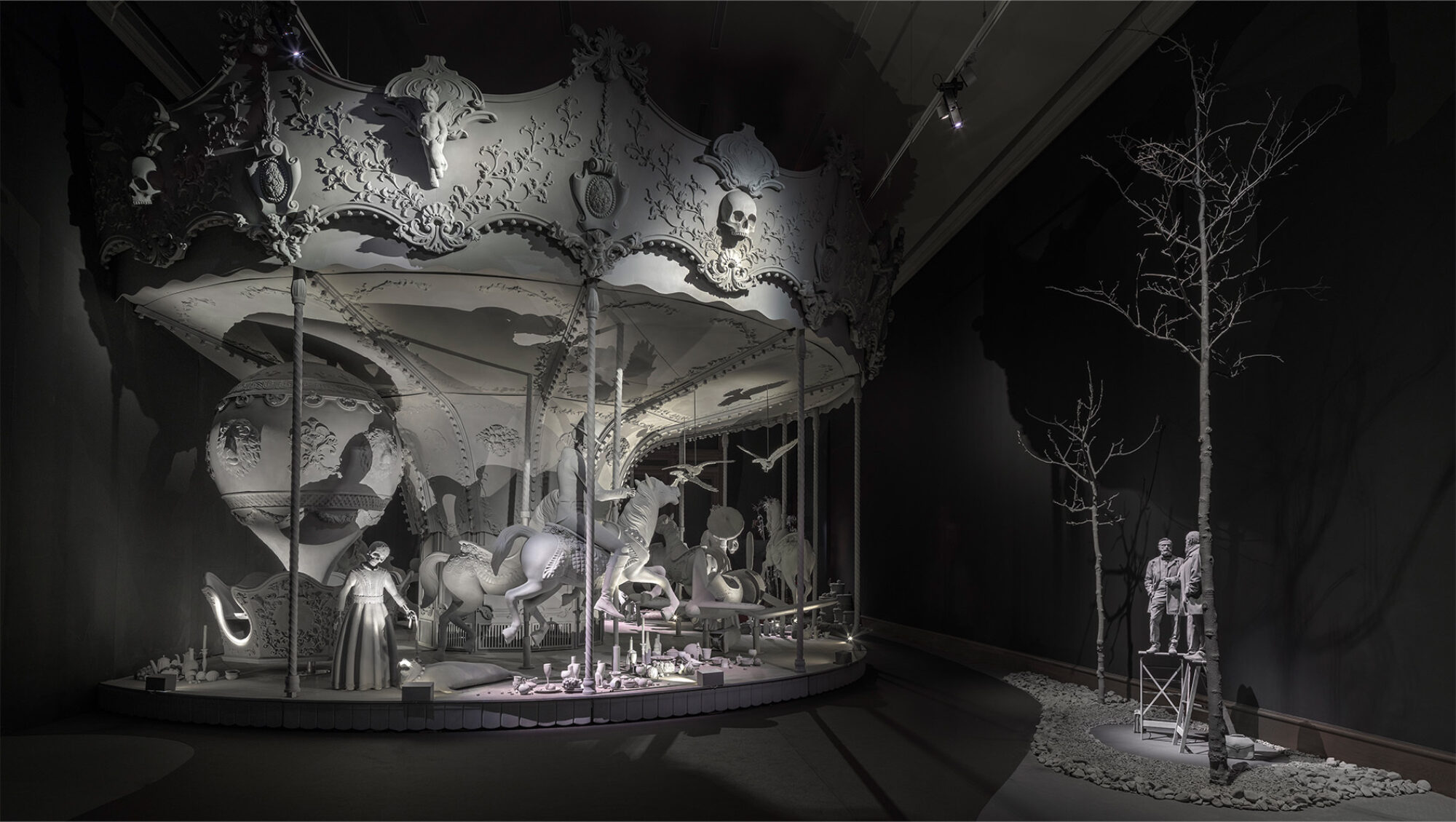 An Artistic World Between Reality and Dreams
Hans Op de Beeck is one of the internationally acclaimed contemporary artists. His multifaceted body of work encompasses monumental installations, sculptures, films, drawings, watercolours, photography, opera and theatre productions, as well as written texts.
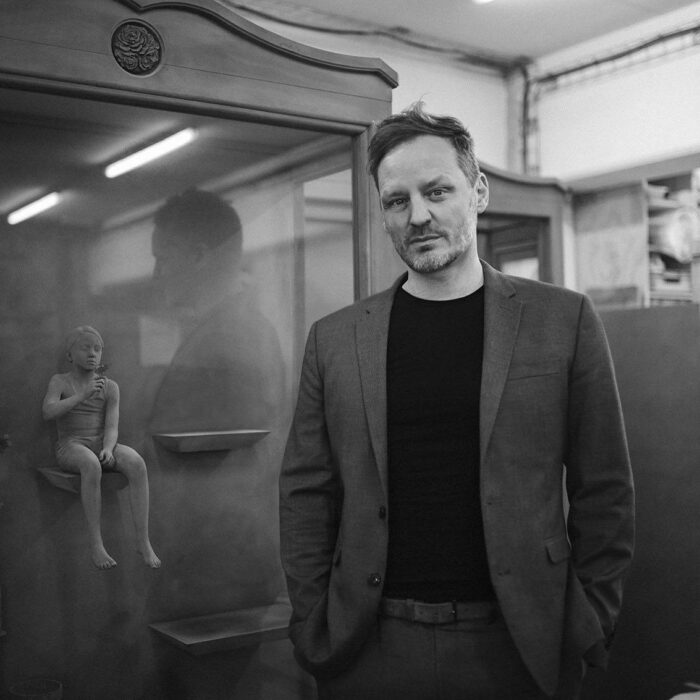
Hans Op de Beeck * 1969 in Turnhout, Belgium. Lives and works in Brussels and Gooik, Belgium
In his work, he explores human existence, our society and universal questions surrounding meaning, transience and memory. He creates visual worlds that exist somewhere between reality and fiction, the familiar and the dreamlike. Often devoid of human presence, his atmospheric installations invite viewers to pause, look more closely and question their own perception.
His works have been exhibited internationally at major museums and exhibition venues, including the Hirshhorn Museum and Sculpture Garden in Washington, the Kunstmuseum Wolfsburg in Germany, and Amos Rex in Helsinki. In 2025, the Royal Museum of Fine Arts Antwerp (KMSKA) presented Nocturnal Journey, a major solo exhibition that invited visitors to immerse themselves in a mysterious nocturnal world created specifically for the occasion.
Beyond his artistic practice, Op de Beeck has also attracted public attention: in 2023, he created the official busts of the Belgian royal couple, King Philippe and Queen Mathilde. His diverse body of work demonstrates how a distinctive artistic vision can evolve across different media and achieve international recognition.
Op de Beeck does not see his artistic intention as the pursuit of a perfectly accurate representation of reality. What matters most, he explained, is the feeling a work conveys. During the conversation, he summed it up beautifully:
“It’s more about the feeling that a character breathes.”
For him, it is less about reproducing every detail – such as eyelashes or freckles – as realistically as possible. Instead, a figure should develop its own presence and evoke something in the viewer.
The grey tones of his sculptures leave room for viewers to imagine and project their own worlds of colour and interpretation.
An Encounter That Opened New Doors
One of the particularly memorable moments of the Artist Talk was Hans Op de Beeck’s account of an encounter with the Italian artist Michelangelo Pistoletto.
During his time at the Rijksakademie in Amsterdam, he met numerous artists from different generations. One of these encounters would prove particularly important for his future development.
Pistoletto recognised the potential in his work and told him, as Hans recalls:
“I love your work. I will bring your work to Torino and to Milano.”
This recognition led to further opportunities. Pistoletto invited him to Turin and to the Fondazione Pistoletto. Hans remembers that moment:
“And from there things started to develop.”
His story illustrates just how important exchange and connections within the art world can be. Encounters, conversations and mutual appreciation can open up perspectives that one might never have discovered alone.
Op de Beeck also spoke openly about his own personality. He described himself as rather shy and not particularly extroverted. Traditional networking at exhibition openings and social events had never come naturally to him.
His story makes one thing clear: an artistic career does not require constantly putting yourself in the spotlight. There are many different ways to build connections and establish yourself as an artist.
Artistic Development Means Staying Open
Another key topic of the conversation was the development of one’s own artistic language.
Op de Beeck spoke about one of his teachers at art school, an abstract painter whose approach initially seemed far removed from his own artistic practice at the time. He himself had come from a more narrative, illustrative visual language and had, among other things, been interested in comics.
With growing experience, he became increasingly open to different forms of artistic expression. Abstraction, reduced forms, colour and spatial compositions gradually found their way into his thinking and work.
He described this process as an expansion of one’s perception – comparable to the way musical tastes and interests evolve throughout life.
“You start to broaden your reception or your receptiveness for the arts.”
An important lesson for young artists: your own artistic identity does not have to be fully defined from the beginning. It can change, expand and evolve. Openness and curiosity are just as much a part of the artistic process as craftsmanship and consistent practice.
Success After 40 – Why Patience Is Part of an Artistic Career
One of the most powerful messages Hans Op de Beeck shared with the students came towards the end of the conversation.
He explained that he did not achieve real success until he was over 40. Before that, he worked in various jobs and organised his everyday life in such a way that he could continue working consistently on his own artistic projects.
He invested his earnings in an assistant who not only helped him with his large-scale sculptures but also took care of his accounting.
He deliberately reserved three days a week for his art.
This consistency proved essential. Even when external circumstances did not allow him to devote himself exclusively to his artistic practice, he remained committed to his path.
His advice to the next generation was clear:
- Believe in your work and in your own abilities.
- Work on your projects with discipline and consistency.
- Actively seek opportunities and apply for open calls.
- Take advantage of artist camps and other opportunities for exchange.
- Stay open to encounters and new perspectives.
- Be patient and give yourself time to develop.
An artistic career rarely follows a straight line. Recognition and opportunities do not necessarily come immediately. Sometimes it takes years for experience, connections and personal artistic development to come together and create new opportunities.
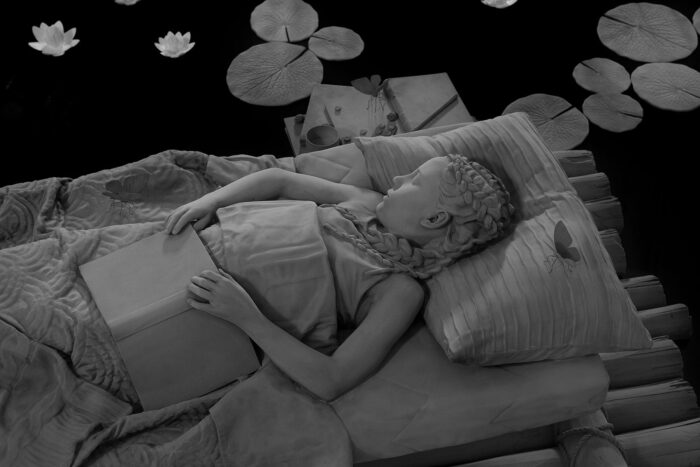
My bed a raft, the room the sea, and then I laughed some gloom in me – Hans Op de Beeck, Sculpture, 2019. 400 × 400 × 114 cm. Polyester, polyurethane, steel, polyamide, epoxy, wood, coating
Why Artist Talks Matter
For students at the Academy of Fine Art Germany, Artist Talks provide a valuable complement to their practical and technical training.
They offer a glimpse behind the finished works and communicate something that cannot be learned from books or in the studio alone: the reality of pursuing a professional career as an artist.
How do important connections come about? How do you deal with uncertainty? What happens when success takes longer than expected? And how do you remain committed to your art despite other professional and personal responsibilities?
The openness with which Hans Op de Beeck shared his experiences made one thing clear: there are no universal answers to these questions. Every artistic journey is different.
His story is therefore, above all, an encouragement: early success does not determine the potential of an artistic career. What matters is continuing to work, remaining curious and believing in your own development.
“There is no single path to success”
Sometimes it takes time. Sometimes it takes an encounter. And sometimes it simply takes the discipline to keep going three days a week – even when no one is watching yet.
Courage, discipline, determination and a healthy dose of stubbornness are valuable qualities when it comes to forging your own path as an artist.
“Be brave enough to become an artist, to be an artist, and to be active in the arts. That’s what we should truly cherish.”
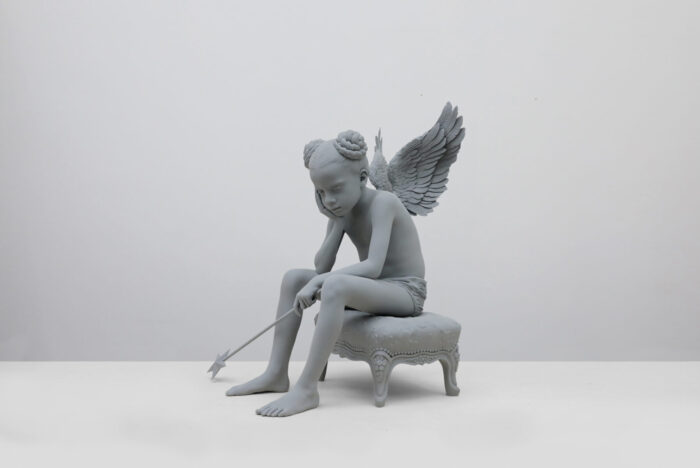
Zhai-Liza (angel) – Hans Op de Beeck – Sculpture, 2024, 52 × 59 × 81 cm. Polyester, polyamide, coating
A Glimpse into the Professional Art World
The Artist Talk is part of the Art Business programme at the Academy of Fine Art Germany. Once a month, the Academy invites internationally renowned artists to meet with its students and share insights into the professional art world.
These talks give students the opportunity to ask questions about all aspects of an artistic career – from establishing themselves as artists and building professional networks to finding opportunities and navigating the art market.
The Artist Talk with Hans Op de Beeck led to a particularly exciting opportunity: one of the students approached the artist to apply for an internship and was subsequently offered the chance to gain first-hand experience working with the internationally acclaimed artist.
For the students, these encounters provide a unique opportunity to look beyond their studio practice and gain a deeper understanding of the realities, challenges and possibilities of a professional career in the arts.
The Academy of Fine Art Germany would like to thank Hans Op de Beeck for the open exchange and for sharing such inspiring insights into his artistic practice and personal journey.
Quelle:
https://hansopdebeeck.com/about
https://galerie-krinzinger.at/artists/hans-op-de-beeck-afca3aa4/
Andrea Herzog