Plein Air Painting, also known as Outdoor Painting, is simply painting in the open air. Natural light and shadow conditions, weather conditions, and close observation of the colors and shapes of the landscape play a major role in this technique. In this article, we explain the most important tips and tricks for getting started with Plein Air Painting.
How did plein air painting become possible?
Although artists had been painting in nature since the Renaissance, landscape painting only made its breakthrough with Impressionism and the invention of paint tubes and portable easels. Previously, it was time-consuming and impractical to mix colors on site and transport materials, which is why landscapes were often sketched outdoors and only completed with oil paints in the studio.
Preparing for plein air
Materials
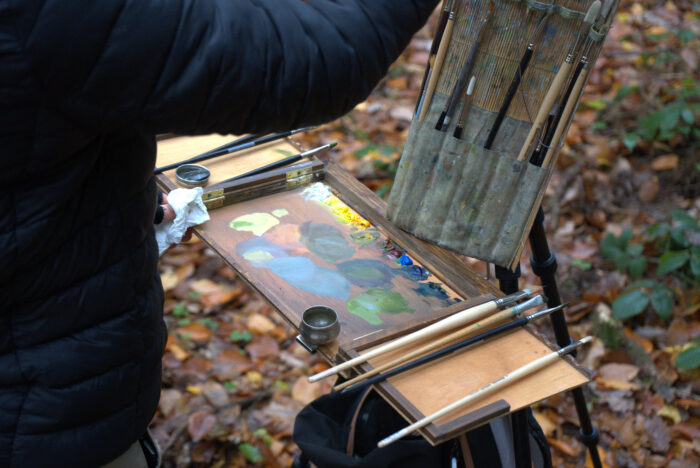
Make sure you have all the painting supplies you need. These should include a portable easel, a handful of oil paints, a container of turpentine and/or oil, cloths or rags, a small painting surface, and various brushes.

Weather
Before you set off, make sure the weather is suitable for outdoor painting and adjust your clothing and equipment accordingly.
Color palette
The selection of colors varies from artist to artist. However, we recommend this color palette, which will allow you to achieve any color found in nature:
- Titanium White
- Cadmium Yellow Light, Medium, and Dark
- Yellow Ochre
- Cadmium Red Medium
- Alizarin Crimson
- Cerulean, Ultramarine, and Phthalo Blue
Toning the painting surface
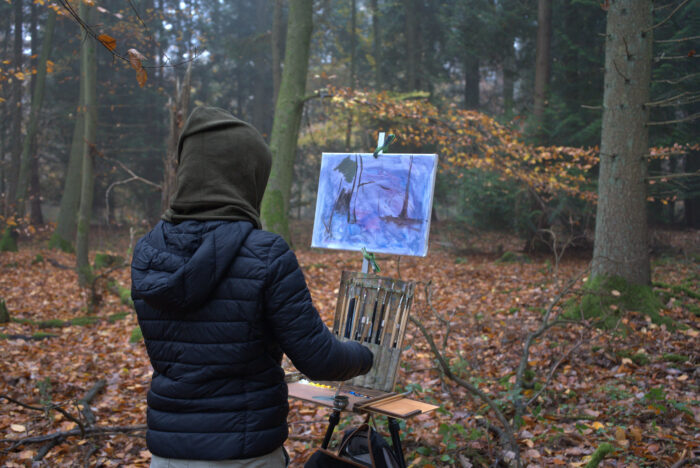
Toning your background (Imprimatura) has many advantages: it removes the white background and makes it easier to differentiate between color values. In addition, the transparent character of oil paints allows you to influence the perceived temperature of the image.

Find a suitable scene
Choose a place for plein air painting that catches your eye. Make a quick thumbnail sketch to analyze what you like about it—be it the colors, the contrast, or the subject itself.
Pay attention to lighting conditions
Keep in mind that lighting and weather conditions can change within minutes. A sketch is also helpful for this.
Tips for plein air painting
Focus on the overall impression
It’s best to start by arranging the darkest and then the lightest colors on your painting surface. This will make it easier for you to add the remaining colors and color values without being distracted by details.
Use separate brushes for your colors
By changing brushes, you prevent the colors from mixing and becoming muddy. This also allows you to create different effects and textures in your paintings.
Imagine the landscape as a theater
To create a sense of space and volume in your painting, imagine that the landscape consists of different layers. Work from the background to the foreground to make the subject stand out more.

The final brushstrokes
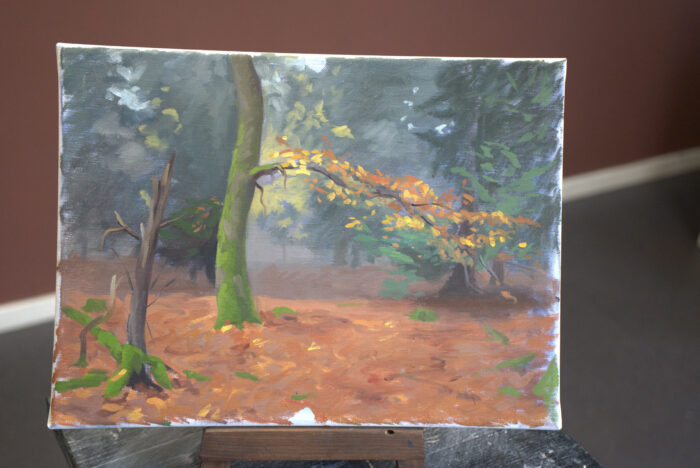
Make sure that the focus and atmosphere you want to convey are clearly recognizable. To do this, check the transitions between your colors, adjust them if they need to be softer or sharper, and finally refine the details.
Feel free to watch our new YouTube Video on Plein Air Painting, where we take you through the full process of creating an autumn landscape painting outdoors.